
Ask any restaurant owner what their most expensive maintenance call of the year was, and there is a reasonable chance it involved a missed grease-trap cleaning. A backed-up drain during a Friday dinner service, a health inspection that went sideways, a plumbing emergency that shut the kitchen down for half a day, these are not random bad luck. They are predictable outcomes of a system that was not given the attention it needed.
The U.S. Environmental Protection Agency has found that FOG (fats, oils, and grease) accounts for nearly 47 percent of sewer blockages across the country. For food service businesses across Central Iowa, from Des Moines and Ankeny to Waukee and West Des Moines, staying ahead of that problem is both a regulatory requirement and a straightforward operational decision.
This guide covers seven practical grease trap cleaning solutions that keep commercial kitchens sanitary, compliant, and running without unplanned interruptions.
Why Sustainable Grease Trap Cleaning Matters
Grease accumulates in every commercial kitchen as a natural result of daily cooking. The system managing it either keeps pace with that output or it does not, and when it does not, the consequences follow a fairly predictable pattern.
What kitchens that fall behind on grease management experience
- Plumbing backups that shut operations down mid-service
- Persistent odors reaching dining areas and affecting the customer experience
- Health department violations that carry fines and damage the business’s reputation
- Emergency service calls that cost considerably more than scheduled maintenance
| Benefit | Operational Impact |
| Fewer plumbing failures | Eliminates the emergency calls that cost three times what routine service does |
| Health code compliance | Keeps inspections clean and avoids fines |
| Reduced kitchen odors | Removes the bacterial buildup that follows grease accumulation |
| Environmental protection | Keeps FOG out of the municipal sewer infrastructure |
| Lower long-term costs | Extends the working life of connected drainage equipment |
For any business that depends on uninterrupted kitchen operations, sustainable restaurant maintenance is simply good financial management.
1. Routine Grease Trap Pumping and Inspection
Scheduled pumping is the foundation that every other grease management measure builds on. Without it, the trap moves steadily toward capacity regardless of what else is being done.
Iowa generally requires grease trap cleaning for restaurants at least every three months, though high-volume kitchens with heavy frying menus often need service more frequently than that minimum.
What a professional service visit covers
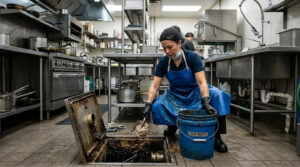
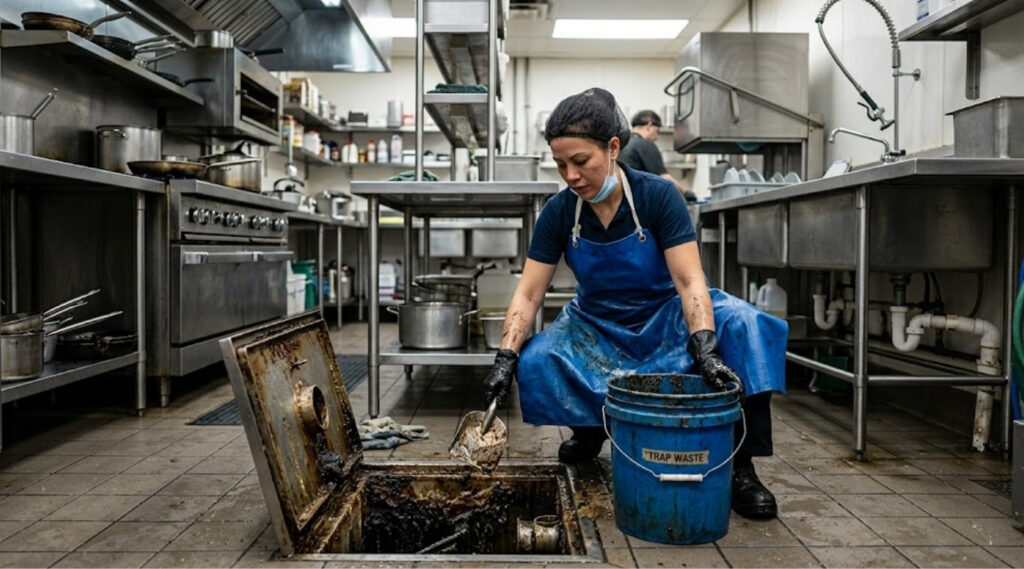
- Complete removal of accumulated FOG and solids from the tank
- Inspection of trap walls, baffles, and internal components
- Cleaning of the residue that pumping alone cannot fully reach
- Service documentation is ready for health department review
Kitchens producing large volumes of fried food should treat quarterly service as a floor rather than a target, and discuss the actual frequency with their service provider based on actual kitchen output.
2. Enzyme-Based Grease Treatment
Enzyme-based grease treatment works in the intervals between scheduled cleanings, which is precisely where most grease accumulation happens. These biological solutions introduce naturally occurring bacteria into the drain system that break down grease molecules before they solidify and build up.
What they contribute to the overall program
- Support for sustainable FOG management by slowing the accumulation between pumping visits
- Measurable reduction in odors caused by decomposing organic material in the lines
- Improved drain performance throughout the kitchen’s plumbing system
- A complementary layer of protection that extends the time between emergency calls
The U.S. Department of Energy has noted that recovered grease can be converted into renewable fuel, connecting responsible, eco-friendly grease trap maintenance to broader sustainability goals that matter to regulators and customers alike.
3. Manual Scraping and Deep Cleaning
Pumping removes the bulk of accumulated waste, but grease that adheres to trap walls and internal components over time is a different problem. That residue reduces separation efficiency gradually and requires physical removal to address properly.
What thorough deep cleaning involves
- Scraping deposits from all interior trap surfaces
- Cleaning baffles and internal chambers that collect residue the pump cannot reach
- Removing solids from areas that standard service leaves behind
- Inspecting structural components for early signs of wear or deterioration
This is what health code grease trap compliance looks like in practice. Most professional restaurant grease trap service programs include deep cleaning as part of the scheduled pump-out, rather than booking it in as a separate service.
4. Hydro Jetting for Drain Lines
Grease does not stay in the trap. Over time, FOG builds up in the downstream plumbing lines connecting the kitchen to the municipal system, narrowing pipe diameter and creating backups in sections that routine pumping never addresses.
When is hydro jetting worth incorporating into the maintenance plan?
- Drain slowdowns that return despite regular trap service
- Grease odors coming from plumbing lines rather than the trap itself
- Visible buildup detected during pipe inspection
- Older plumbing in high-volume kitchens with years of accumulated residue
| Situation | Why Hydro Jetting Helps |
| Recurring drain slowdowns | Removes FOG from lines that pumping cannot reach |
| Persistent plumbing odors | Clears the source rather than masking the symptom |
| Pre-inspection preparation | Ensures the entire drainage system is clear, not just the trap |
| High-volume kitchen maintenance | Keeps the full plumbing system performing under sustained demand |
5. Responsible FOG Disposal and Grease Recycling
What happens to the grease after the trap is cleaned is part of the compliance and sustainability picture, not an afterthought. Recovered cooking oils and grease can be processed into biodiesel, and the U.S. Department of Agriculture has documented that recycled cooking oils contribute meaningfully to domestic renewable fuel production each year.
What does responsible disposal deliver for the business
- Keeps FOG out of landfill and sewer systems, where it causes ongoing damage
- Supports the business’s sustainability credentials with regulators and customers
- Connects kitchen operations to grease recycling for biodiesel programs that benefit the broader community
- Costs nothing beyond working with a service provider who handles it as part of the collection
Grease recycling for biodiesel is one of the cleaner intersections between food service operations and genuine environmental responsibility.
6. Staff Training and Kitchen Best Practices
The most well-maintained grease trap will still struggle if daily kitchen habits send FOG volumes into the drain that exceed the system’s design capacity. What the team does between service visits determines how quickly the trap fills.
Practices that make a measurable difference
- Scraping cookware and food waste into bins before any washing begins
- Collecting used cooking oil in dedicated containers for proper recycling
- Never pour grease or oily liquids directly into drains under any circumstances
- Using strainers in sinks and floor drains to catch solids at the source
- Following the maintenance schedule without exception during busy periods
Kitchens that train their teams on these habits consistently report fewer plumbing problems and lower overall commercial kitchen plumbing maintenance costs, which reflects exactly what you would expect when less grease enters the system in the first place.
7. Digital Monitoring and Maintenance Alerts
Managing grease interceptor cleaning schedules and compliance documentation across a busy kitchen, particularly across multiple locations, carries more administrative weight than many operators anticipate. Digital monitoring platforms reduce that burden considerably.
What these systems provide
- Instant access to service records when health inspectors arrive
- Automated scheduling alerts that prevent maintenance visits from being delayed or forgotten
- Complete documentation history demonstrating consistent compliance over time
- Simplified oversight for operations managers handling more than one site
| Feature | Why It Matters |
| Service record access | Inspections become straightforward rather than stressful |
| Automated maintenance alerts | Scheduled visits happen on time rather than when someone remembers |
| Full compliance history | Demonstrates a consistent track record to regulators |
| Multi-site management | Keeps every location on schedule from a single platform |
How Often Should Commercial Kitchens Clean Grease Traps?
Iowa guidelines recommend quarterly commercial grease trap cleaning as a baseline, but the right frequency for any individual kitchen depends on what that kitchen actually produces.
Factors that determine the appropriate service interval
- Kitchens with higher daily output fill traps faster and need more frequent visits
- Heavy-frying menus generate significantly more FOG per service than lighter cooking
- Smaller traps reach capacity sooner, regardless of overall kitchen volume
- Local regulations set the minimum, but actual usage should drive the real schedule
| Factor | Effect on Cleaning Schedule |
| Kitchen volume | Higher output means shorter intervals between service visits |
| Menu composition | Frying-heavy menus produce more FOG and require closer monitoring |
| Trap capacity | Smaller traps need attention more often under equivalent load |
| Local regulations | Iowa’s quarterly guideline is a floor, not a ceiling |
Consistent scheduling prevents the four outcomes that make grease management expensive: emergency shutdowns, sewer line blockages, inspection violations, and unplanned operational downtime.
Keeping Commercial Kitchens Efficient, Compliant, and Sustainable
Commercial grease trap cleaning services done on a proper schedule are not a cost to be minimized. They are what keep a commercial kitchen’s plumbing functional, its health department record clean, and its contribution to the municipal sewer system within acceptable limits.
Waste Solutions of Iowa has been serving food service businesses across Central Iowa since the early 1980s, providing commercial grease trap cleaning, interceptor maintenance, and preventive service programs tailored to how individual kitchens actually operate. Our experience with Des Moines-area businesses means they understand the specific demands of this region’s food service industry rather than applying a generic approach. If your kitchen’s grease management needs a more reliable structure, our team is worth a conversation before the next inspection arrives.
Contact us at (515) 750-2339 to schedule an appointment with our team today.