
Even a dumpster that looks less than half full can be too heavy to lift off your property. That’s the trap most people fall into on a demolition job: judging a container by the amount of space left, not by what the material actually weighs, and ending up with a truck that can’t legally haul the load, a second delivery, or a rejected recycling batch because concrete got mixed in with everything else. The delays don’t stop at the job site either; a stalled pickup means a stalled crew, a stalled inspection, and a project timeline that quietly slips by days. Waste Solutions of Iowa sees this play out on job sites constantly, and it’s almost always avoidable once you understand how these two dumpster types actually work.
This guide breaks down the real differences between a concrete dumpster and a mixed-debris dumpster, not just what goes in each, but why weight, material type, and disposal method change everything about how a project should be planned. By the end, you’ll know precisely which container is right for your job, even before you dial the phone to book one.
What Is a Concrete Dumpster?
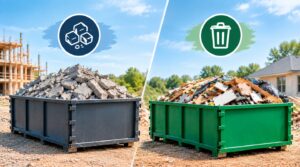
A concrete dumpster is not a dumpster for concrete – it’s built around a different math problem entirely. Concrete is one of the heaviest materials on any job site, so these containers are built for weight limits first and volume second.
What Can You Put in a Concrete Dumpster?
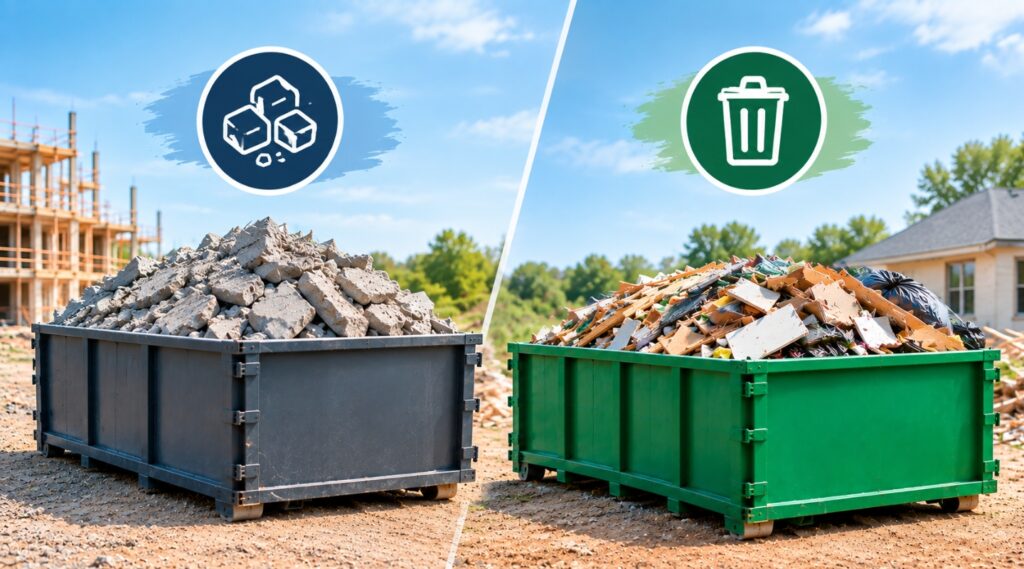
A concrete disposal dumpster stays limited to masonry-only debris:
- Broken concrete slabs and chunks
- Bricks and cinder blocks
- Asphalt millings
- Stone and masonry rubble
Adding wood, drywall, or general trash isn’t a minor issue here. Many recycling plants will reject a whole load if it is contaminated. Crushed concrete is only recycled into road base and aggregate if it is clean.
Why Is Concrete Considered Heavy Waste?
Solid concrete weighs about 150 pounds per cubic foot, or about 4,000 pounds per cubic yard. Even broken, it’s still running close to 2,000 pounds per yard. So a typical 10-yard container will hold about five cubic yards of solid concrete before it looks anywhere near full. This is exactly why a dumpster for concrete is almost always a smaller size than the container you’d expect for the same job’s overall volume. Skip this step, and you risk a truck that physically can’t lift the load off your property, forcing a partial unload on-site before it can be hauled away at all.
What Is a Mixed-Debris Dumpster?
Mixed-debris containers take up a different problem entirely: variety, not density. These are designed for job sites where multiple material types are being produced at the same time, and sorting out everything separately would slow the project to a crawl.
What Can Go into a Mixed Debris Dumpster?
Mixed construction debris commonly includes:
- Lumber and framing scraps
- Drywall and insulation
- Flooring, carpet, and tile
- Cabinetry and fixtures
- General renovation waste
When Is a Mixed-Debris Dumpster a Better Choice?
Any project generating varied material- a kitchen gut, a full remodel, a property cleanout- fits better here than in a weight-restricted concrete bin.
A dumpster that looks half-empty can already be over its weight limit; concrete just doesn’t play by the same rules as everything else.
Concrete vs. Mixed-Debris Dumpsters: What’s the Difference?
| Factor | Concrete Dumpster | Mixed-Debris Dumpster |
| Best For | Concrete, brick, asphalt, and masonry waste | Construction, renovation, demolition, and general cleanup waste |
| Type of Waste | Primarily heavy, dense materials | A combination of materials such as wood, drywall, flooring, and other debris |
| Weight Consideration | Weight is especially important because concrete is extremely dense | Weight still matters, but the waste is generally more varied |
| Ideal Projects | Driveway, patio, sidewalk, slab, or concrete demolition | Home remodeling, construction, property cleanouts, and demolition |
| Main Advantage | Handles large volumes of heavy concrete waste safely | Offers flexibility for projects producing several debris types |
When Should You Rent a Concrete Dumpster?
Any project that’s mostly masonry, driveway tear-outs, patio removal, sidewalk replacement, or slab demolition, you’ll want a concrete dumpster rental. For this type of job, the normal way to rent a general container is to pay for space that concrete will never actually occupy before reaching its weight limit. This also means a slower clean-up, as you often have to swap out a volume-based, not weight-based, bin once it’s tapped out mid-project.
When Should You Rent a Mixed Debris Dumpster?
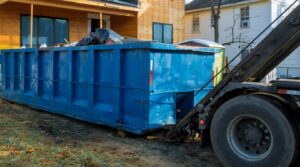
If your project is producing walls, flooring, fixtures, and framing all at once, a mixed-debris dumpster rental is the practical fit. This is also the standard for demolition debris dumpster needs where a full structure, not just a slab, is coming down. Since the overall mix of materials is lighter, these containers can usually be filled closer to their visual capacity without the weight concerns that come with pure concrete jobs.
Can You Put Concrete in a Regular Mixed Debris Dumpster?
A small amount usually won’t cause problems. But treating a mixed container like a roll-off dumpster for concrete is a common and costly mistake; the weight adds up fast, and it can disqualify the entire load from being recycled as clean aggregate. When other debris is mixed in, facilities often have no choice but to send the entire load to a landfill rather than a recycling stream, undoing what could have been a simple, sustainable disposal.
How Much Concrete Can You Put in a Dumpster?
Over 140 million tons of concrete are processed and recycled into new aggregate and road base across the country each year, but only if loads are uncontaminated and within weight limits. Because broken concrete runs close to a ton per cubic yard, most rental teams recommend smaller, reinforced containers built specifically for concrete removal rather than standard-sized bins.
How to Choose the Right Dumpster for Your Project
Before delivery day, a few practical checks are needed to match the container to the job.
Step 1: Identify the Type of Waste
Is it overwhelmingly concrete, or a mix of materials? This single question determines everything else.
Step 2: Estimate the Amount of Debris
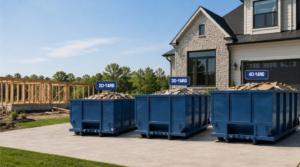
The most common reason a project requires a second container mid-job is underestimating volume.
Step 3: Consider Weight
Weight, not size, decides how much concrete waste disposal a container can safely handle.
Step 4: Confirm Accepted Materials
Some items, including treated wood, hazardous waste, and e-waste, aren’t allowed in either container and must be disposed of separately.
Tips for Loading Concrete and Construction Debris
- Break concrete into smaller pieces before loading.
- Load heavy, flat material first, lighter debris on top.
- Distribute weight evenly across the floor.
- Never exceed the fill line.
- Keep prohibited items out of both container types.
Final Thoughts
Choosing between a concrete dumpster rental and a mixed-debris dumpster rental isn’t just about size; it’s about weight, material type, and how the debris gets processed once it leaves your property. Get it wrong, and you face stalled work, rejected recycling loads, or a second container you didn’t budget time for, all of which cost far more in delay than the extra planning would have taken up front.
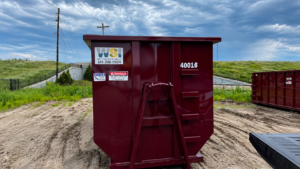
Waste Solutions of Iowa works with contractors and homeowners across Ankeny, Des Moines, Waukee, West Des Moines, and Pella, IA to match the right dumpster rental for construction projects and dumpster rental for renovation jobs before the first load ever goes in. We discuss waste type, estimated weight, and what can go in so that nothing is left to guesswork halfway through the job. We also help you avoid the overage fees and rescheduled pickups that come from a poorly fitted container.
For reliable Iowa dumpster rental service and a team that gets the container right the first time, call Waste Solutions of Iowa at (515) 750-2346.
FAQs
1.Can I put concrete in a mixed-debris dumpster?
Small amounts are usually fine, but if you have a lot, you could go over the weight limit, and the load won’t be recycled.
2. What materials can go in a concrete dumpster?
Broken concrete, brick, asphalt, and masonry rubble only; no wood, drywall, or household trash.
3. What dumpster is best for a home renovation?
A mixed-debris dumpster, since renovations typically produce several material types rather than one dense one.
4. Can construction debris and concrete be placed in the same dumpster?
Not in large amounts; concrete’s density can max out a container’s weight limit long before it looks full.
5. What are the best dumpster rental services near me?
Waste Solutions of Iowa serves Ankeny, Des Moines, Waukee, West Des Moines, and Pella, IA, with dumpster options matched to each project’s waste type.